
Technology that can easily allow you to see information on your health will make society healthier and better. Owning something like an Apple Watch, you can easily access your heart rate, and other information like how many steps you took that day, can help everyone be a healthier person. In the near future, this technology will likely get better, giving more accurate readings, which will help people become healthier. With the high obesity level in American society, things like the Apple Watch can help people lose weight. If someone wants to take a certain number of steps per day, they can simply look down at their watch to keep track. If they want something to help them track their workouts, an apple watch or a phone can help them see what they’ve done, and what else they have to do. I also think that having these devices, where you can set goals, make workout schedules and plan meals, can motivate people to lose the weight to make them a healthier person.
The chances of two people feeling a special attraction and an interpersonal spark (i.e. “chemistry”), are comparatively greater in a digital environment than offline. Do you agree or disagree, and why?

I agree that there is a greater chance of two people feeling a special attraction in a digital environment because in a digital environment, it is easier to show everything good about you, and hide the bad things. When meeting in person, two people might quickly realize everything they don’t like about a person, so they may not feel a special attraction. Online, it’s harder to find people that show the real version of themselves, which means that people could fall in love with a completely different person than the real-life version of them. People feel the interpersonal spark more online, even if it’s based on false pretenses.
Do people create new, different projections of themselves online, or do they stay close to their face-to-face identities? Discuss.
People tend to create a new projection of themselves online. I see a lot of people that try to make themselves seem “cool” by posting things online that aren’t true to themselves. Typically, this is seen a lot when someone is constantly starting drama online, or constantly has something to say about someone else. They wouldn’t say a lot of these things in person, and on social media, they are referred to as “keyboard warriors.”
A someone that doesn’t post much on social media, I feel that I stay true to who I really am. A lot of people I have as friends or follow on social media are people that I tend not to interact with much in person. In person, when I’m near people that I’m not that close with, I usually stay on the quite side and keep things to myself. For this reason, I don’t post much on social media because I don’t really feel that people I’m not close with need to be seeing what I’m saying. If I only had close friends on social media, I would probably post more because I am comfortable with them.
Does innovation tend to reduce social inequality or deepen it? Provide examples.
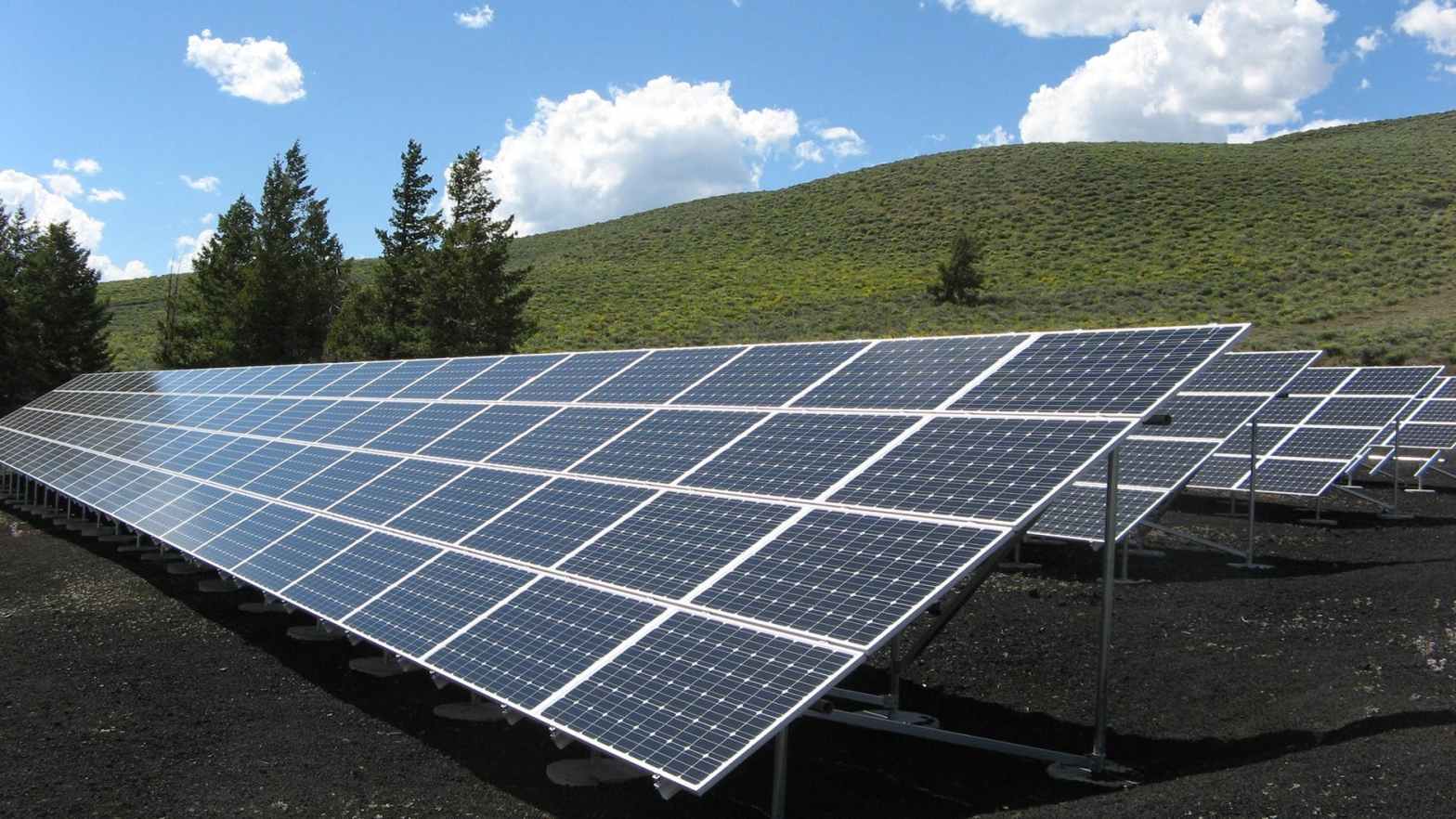
In my eyes, innovation deepens social inequality because if gives the rich a better chance to get richer, while the poor are left behind. When new, life changing technology comes out, the upper class is able to buy it, while the lower class, and much of the middle class, is unable to afford it. For example, solar power came out and, while being better for the environment, was advertised as a way to save money on your electric bill. However, it is expensive to buy the solar panels and have them installed. This can easily cost over $10,000, and many families can’t afford that.
Chapter 4
How can you tell when information or websites on the internet are fake or credible? Explain and provide at least one example of each.
One good way to tell if a website is credible or fake is to look at the domain at the end of the website link. If the domain is “.gov”, it is a credible website ran by the government, such as “Home.treasury.gov”, which is the website for the US Department of the Treasury. While looking at a commercial website, or “.com”, you may need to do some research on the company or group that owns the website. Typically, you can find out if a website, or its information, is fake by looking it up. Look up reviews on the website, and see if there are reviews saying that information is fake, or if there are no reviews, it is most likely fake. For example, a popular satirical news website is “www.theonion.com”. This website only posts fake news articles, such as “Coronavirus Fears Prompt 200-Foot Surgical Mask To Be Mounted Over Docking Cruise Ship“.
Chapter 3
Do you think the increase in digital spaces (social media platforms, websites, chat areas, discussion boards, online games, workspaces, classes, conferences, hangouts, email and text messages) has brought people closer together and/or encouraged isolation among people? Explain your position.
I believe that the increase in digital spaces has brought people closer together rather than encouraged isolation among people. In terms of social media, chat areas, and text messages, it has given people an easier way to connect with each other and check up on each other. You can constantly be in contact with one of your friends or family members, no matter where they’re at. With online conferences, it gives people in different professions the opportunity to talk to others from around the world about their field of work. With coronavirus spreading, it gives people the opportunity to work together to find a way to stop the spread, and allows information about the virus to spread throughout the world faster. While some people may sit around others and stare at their phones, I believe that more are connected by these technologies than separated.
Chapter 2
How would the internet and the digital/social media experience have been different if Tim Berners-Lee had not insisted that it be decentralized and allowed to develop in an open fashion?
If Tim Berners-Lee had not insisted that the Internet be decentralized, it would be completely different than what we know as the Internet today. For starters, and possibly the biggest thing for a lot of people, is that there would likely be a fee just to use the World Wide Web. If this happened, we would likely see the Internet as something that only upper-class people used. It certainly wouldn’t be used in schools like it is today. If a sole company or person owned the internet, they would likely have been the wealthiest person in the world.
Also, the Internet we have is filled with every point of view for every topic we could ever think to research. If it was centralized, we would only get to see what the owner wants us to see. This means that we would only get to see one side of the spectrum. With this year being an election year, it seems to make sense to bring politics into this. We would likely only get to see things from one political side. The majority of people likely get their information on politics from the Internet, so they would only get to see things that benefit one political party, and things that only degrade the other political party. Had the Internet been centralized from the start, we would have a very biased Internet, which isn’t good for keeping a free mind.
Chapter 1
Do you tend to be an early adopter or a laggard when it comes to adopting a new digital technology, or something in between? Discuss and share your rationale.
When it comes to new technology, I use to consider myself an early innovator. At that point, my immaturity caused me to always want the newest of everything. When a new phone came out, I always wanted it, thinking that since it was newer, it would be some life-changing thing. As I matured, I began to look into the new technology and see what I was really paying more money for. Once I started doing this, I came to realize that I was becoming a laggard. The best example for this would be phones. As phones became more and more expensive, I began to see if it was really worth it to buy the newest phone. Typically, I’ve found that it’s best to wait a year or two to buy the newest phone. In that time, no groundbreaking technology is gonna come out, and the phones will begin to drop in price. I think I cared about the social status of having the newest technology as a kid, but came to see that it really doesn’t matter.
What I Hope To Learn
While taking digital culture, I hope to learn about how technology has shaped our political participation. I’ve seen in the past that the generation new to voting has not been voting in elections. I would think this would be he opposite with how big social media has become in the last 5-7 years. I’ve also read that young voters are expected to make a huge impact on the upcoming presidential election, so I’m curios to see research on how technology has affected this.
 Brendan's Blog